Programmable Coffee Machine with Grinder UK: Coffee Ready When You Wake
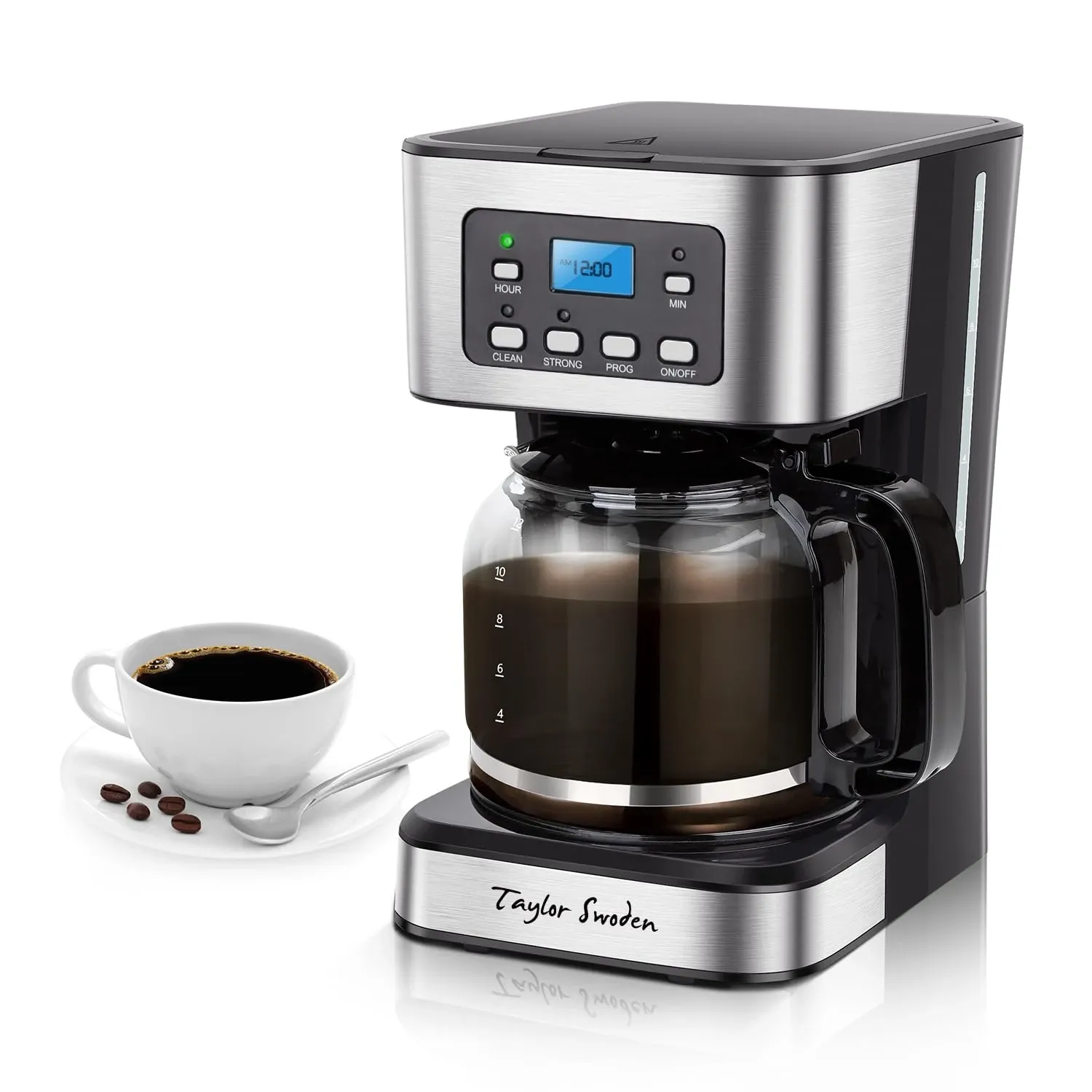
What this machine actually promises
A programmable coffee machine with grinder makes one specific promise to UK early risers: add water and whole beans the night before, set the timer, and wake up to coffee that was ground and brewed minutes ago — not to a machine waiting for you to operate it, and not to coffee made from powder that sat out all night going stale.
The short answer
- The combination that matters is a 24-hour timer plus an integrated grinder: the beans are milled at brew time, so nothing loses its aroma overnight.
- Ordinary programmable filter machines only delay-brew pre-ground coffee — convenient, but the freshness advantage is mostly gone by morning.
- Grinding is brief but audible (roughly 70–75dB for 15–30 seconds on the AromaTimer) — worth planning around in a small home.
- Paired with automatic shut-off and a thermal jug, the machine needs nothing from you on the way out of the door.
Why grinding at brew time beats loading grounds the night before
Plenty of cheaper machines are “programmable”: you fill the basket with ground coffee at 22:00 and water hits it at 06:45. The problem is those nine hours in between. Ground coffee exposes vastly more surface area to air than whole beans, and the volatile aromatics that make fresh coffee smell like fresh coffee fade fastest in exactly that window. By morning you are brewing yesterday’s grounds.
A machine with an integrated grinder holds the beans whole overnight and mills them seconds before the water arrives. Same timer convenience, materially better cup — it is the single clearest reason to pay the difference over a basic delay-brew machine. If you are still weighing this category against automatic espresso machines, our bean to cup vs grind and brew comparison draws that boundary honestly.
The night-before routine, in five steps
On the AromaTimer Thermal Grind & Brew the evening ritual takes about a minute:
- Fill the tank for tomorrow’s pot — anywhere from 2 to 12 cups (1.25 litres at full).
- Top up the hopper with whole beans and pick your grind fineness.
- Choose strength on the Aroma Selector, from mild to intense.
- Set the Auto-Brew time on the 24-hour LCD clock.
- Go to bed. Grinding and brewing start themselves; the machine switches off when the pot is done.
The next morning there is nothing to operate. Pour a mug, or pour a travel cup on the way to the station — because the pot lives in a vacuum-insulated carafe rather than on a hotplate, whoever gets up second still finds hot coffee, not scorched residue.
Will the grinder wake the house?
The honest trade-off of grind-at-brew-time is that grinding makes noise, and it makes it while people may still be asleep. The numbers on this machine: roughly 70–75dB measured during grinding, for about 15–30 seconds per brew. That is kitchen-blender territory — loud in the room, a brief muffled hum a floor away with doors closed.
Three practical mitigations, in order of usefulness:
- Set the timer for when you need to be up anyway — many owners treat the grinder as a second alarm clock rather than a nuisance.
- Close the kitchen door and keep the machine off shared walls with bedrooms in flats.
- Use Grind Off mode with pre-ground on the days someone is sleeping in — silent brewing on the same timer, no beans wasted.
Built for the rushed exit, not just the alarm clock
The timer gets the attention, but for commuters the safety-and-shutdown behaviour matters just as much. Two design details do the quiet work here:
- Automatic shut-off after brewing. The heating element powers down the moment the cycle completes. There is no hotplate to second-guess from the train platform, and nothing left cooking the coffee bitter.
- Thermal carafe instead of a warming plate. The double-walled stainless flask keeps the pot hot for up to 4 hours passively — so one brew covers the 06:45 leaver, the 08:00 school-run parent and the mid-morning refill without anyone re-brewing.
The 2–12 cup range matters more than it sounds for this routine: brew four cups when it is just you catching an early train, or the full carafe when the whole household is on the move.
What to check before buying any programmable machine
- Timer usability. If setting the clock is fiddly, you will stop using it — look for a clear LCD and a setting flow you can do half-asleep. (This one is a five-step setup, listed above.)
- Power-cut behaviour. Ask whether clock and timer settings survive an outage or need re-setting — the honest answer for most machines in this class is “check after a power cut”.
- Grinder bypass. A pre-ground mode (Grind Off here) keeps the machine useful for decaf evenings and quiet mornings.
- Filter format. This machine includes a permanent gold-tone filter and also takes universal Size 4 papers — no proprietary consumables. The cost consequences of consumables are covered in our cheaper alternative to coffee pods guide.
- Water hardness. Much of England is hard-water territory and timers do not descale machines; see the maintenance section of our filter coffee machine UK buying guide.
- Warranty and returns. A 12-month UK warranty and a 30-day window (both offered on the AromaTimer) let you test the routine against real weekday mornings.
The AromaTimer, specifically
The AromaTimer Thermal Grind & Brew is this category distilled: 24-hour programmable timer, integrated stainless-steel burr grinder with adjustable fineness, Aroma Selector strength control, Grind Off bypass, 2–12 cup brewing into a double-walled thermal carafe, and automatic shut-off after every cycle. It is listed at £236.76 inc. VAT (£197.30 ex. VAT) with free next-day UK delivery, 30-day returns and a 12-month UK warranty. One published customer review sums up the use case: waking to the sound of the grinder and the smell of fresh coffee on a Scottish winter morning, with the second cup still hot two hours later.
If your mornings run on a clock — train times, school runs, shift starts — this is the machine type that gives those minutes back.
Frequently asked questions
Does a programmable coffee machine grind the beans overnight?
No. The beans stay whole in the hopper overnight. The machine grinds them at the moment the timer fires, seconds before brewing, which is exactly why the coffee smells and tastes fresher than loading ground coffee the night before.
How loud is the grinder first thing in the morning?
On the AromaTimer, grinding runs at roughly 70-75dB for about 15-30 seconds per brew, similar to a kitchen blender but brief. With the kitchen door closed it registers as a short hum elsewhere in the house; light sleepers directly above a small kitchen may still hear it.
What happens if I sleep through the brew?
Nothing bad. The machine switches itself off automatically as soon as the brewing cycle finishes, and the double-walled thermal carafe keeps the pot hot for up to 4 hours without a hotplate, so a lie-in does not mean burnt or cold coffee.
Can I use pre-ground coffee in a machine with a built-in grinder?
Yes, if the machine has a bypass mode. The AromaTimer's Grind Off mode skips the grinder entirely, so you can brew pre-ground or decaf on the same timer without touching the beans in the hopper.
Do timer settings survive a power cut?
It varies by machine and it is worth checking before you rely on any auto-brew feature. Most machines keep their clock while plugged in; after a full power cut you may need to reset the time and re-arm the timer, so glance at the display the evening after any outage.
Want coffee that starts itself tomorrow at 6:45?
Built-in grinder · thermal carafe · programmable timer · 30-day returns.
Shop AromaTimer — £236.76